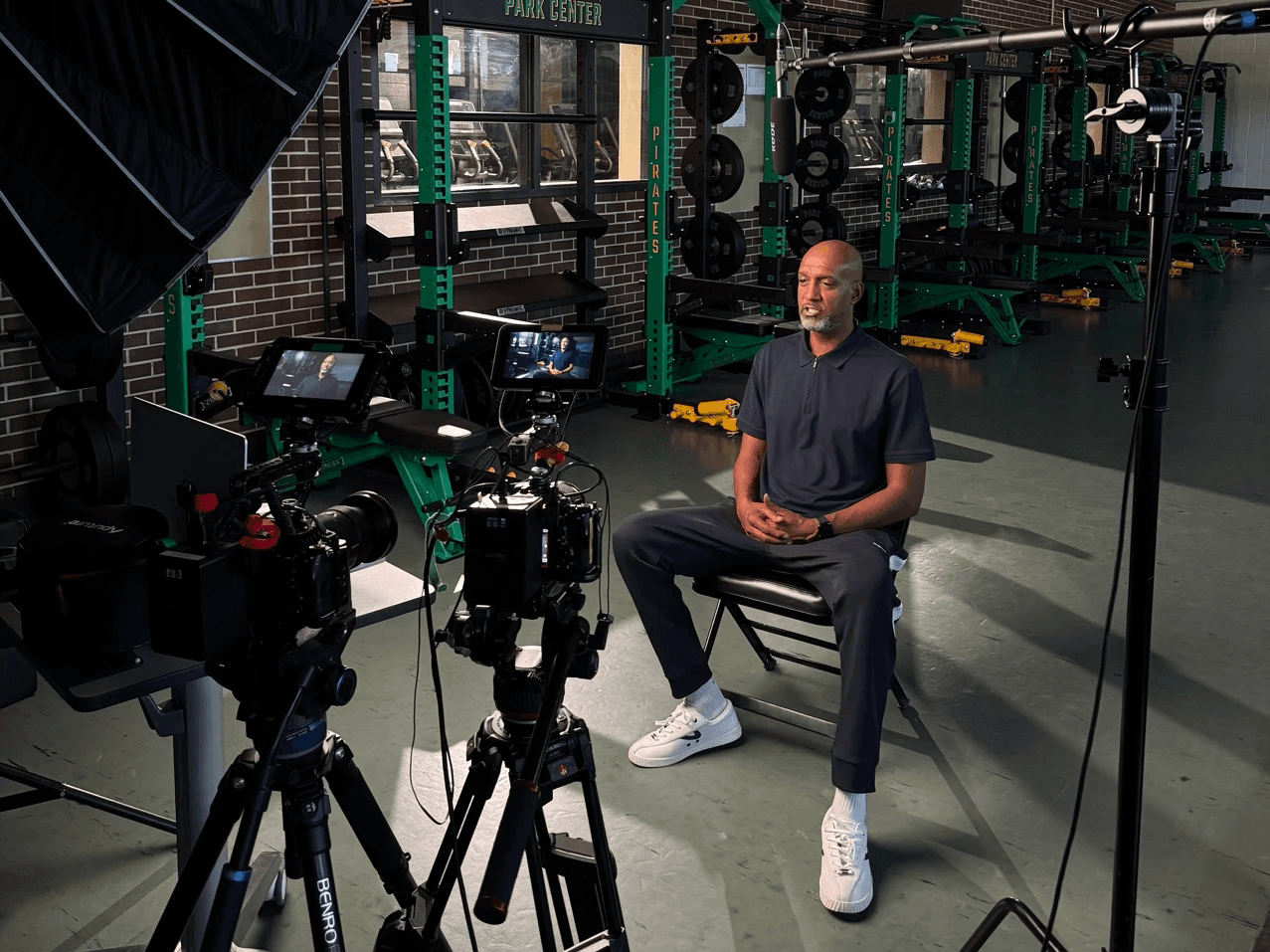
The Types of Business Video (and When to Use Each)
Choosing the wrong type of video is the most expensive mistake a marketing team can make before a single frame is shot. This guide breaks down the main types of business video, what each one is built to do, and how to match the format to the goal, the audience, and the stage of the buyer journey. So your budget goes toward the video that actually moves the metric you care about.
It's written for marketing managers, brand managers, and agency partners who own the outcome, not the camera.
What are the main types of business video?
The main types of business videos are the brand film, the commercial, the corporate video, the product video, the testimonial or case study video, the event recap, the recruiting or culture video, and the nonprofit or fundraising video. Each maps to a different job: brand films build emotional affinity, commercials drive a specific action, corporate videos communicate internally and externally, product videos explain and sell a specific offering, testimonials build trust through proof, event recaps extend the life of a moment, recruiting videos attract talent, and nonprofit videos move donors to give.
The right choice depends less on production budget and more on the single business outcome the video is accountable for. A video that tries to do all eight jobs at once usually does none of them well.
Brand film vs. commercial: what's the difference?
A brand film builds long-term emotional connection to who a company is; a commercial drives a specific, near-term action tied to a product, offer, or campaign.
Brand films are typically 60 seconds to a few minutes, story-led, and light on hard selling. They earn attention on your website homepage, in investor and recruiting contexts, and at the top of a campaign where the goal is affinity and recall. A commercial is tighter, often 15, 30, or 60 seconds. Commercials are engineered around a clear message and a call to action, and built to be cut into the multiple aspect ratios paid media requires.
At Bloom, we've found that teams often ask for "a brand film" when what the campaign actually needs is a commercial with a measurable CTA, and occasionally the reverse, when a team tries to force brand storytelling into a 30-second performance ad and the emotion never lands. Naming the outcome first prevents that mismatch. Both formats live under commercial video production, and the deciding factor is whether you're building brand equity or asking for a click.
What is a corporate video, and when do you need one?
A corporate video is any video produced for a company's operational, communications, or internal-audience needs rather than for direct advertising. This includes culture videos, internal training and onboarding, executive and leadership messages, investor communications, and internal announcements.
You need a corporate video when the audience is an employee, a candidate, a partner, or a stakeholder rather than a prospective customer. The production values still matter. Internal audiences judge a company by the quality of what it shows them, but the tone is usually more direct and informational than a consumer commercial. Recruiting, culture, and testimonial content typically sits inside corporate video production, where the job is to represent the organization credibly to the people who work with it.
Product videos, testimonials, and case study videos
These three formats all sell, but they sell differently, and using them in the right order compounds their effect.
A product video explains what something is and why it matters, ideal for a launch, a feature release, or a landing page where a prospect is evaluating a specific offering. A testimonial video puts a real customer on camera describing the outcome they got, which converts because it transfers trust from a peer rather than from the brand. A case study video goes deeper, walking through a specific problem, the work, and the measurable result. Strongest for considered, higher-ticket B2B purchases where buyers need evidence before they commit.
At Bloom, we've found the highest-performing sequences pair a product video that creates interest with a testimonial or case study that removes risk. The product video earns the click; the proof video closes the gap between "interesting" and "trustworthy."
Event recap, recruiting, and nonprofit videos
An event recap video captures a conference, launch, or company milestone and extends a one-day moment into an asset you use for months. For promotion, sponsor value, and next year's registrations. It works best when it's shot with a narrative in mind, not just as coverage.
A recruiting or culture video shows candidates what it actually feels like to work somewhere, and it's one of the highest-ROI corporate formats because a single strong video can influence hundreds of applicants over its lifespan.
A nonprofit or fundraising video is engineered to move donors, and its success is measured in dollars raised, not views. The strongest ones center a single human story rather than organizational statistics. Nonprofits and foundations are one of Bloom's core audiences; this work sits under non-profit video production, where emotional clarity does more than polish.
Comparison: matching video type to goal, audience, and budget
Use this framework to shortlist the right format before you brief anyone.
Video type | Primary goal | Audience | Typical length | Best-fit stage |
|---|---|---|---|---|
Brand film | Emotional affinity, recall | Customers, recruits, investors | 60s–3 min | Awareness |
Commercial | Specific action / campaign | Target customers | 15–60s | Awareness → Consideration |
Corporate video | Inform internal/stakeholders | Employees, partners | 1–3 min | Internal / trust |
Product video | Explain and sell an offering | Evaluating prospects | 30–90s | Consideration |
Testimonial | Transfer trust via a peer | Skeptical prospects | 60–120s | Consideration → Decision |
Case study | Prove measurable results | B2B decision-makers | 2–4 min | Decision |
Event recap | Extend a moment, drive future attendance | Attendees, sponsors, prospects | 60–120s | Awareness / retention |
Recruiting / culture | Attract and pre-qualify talent | Candidates | 60–120s | Hiring |
Nonprofit / fundraising | Move donors to give | Donors, supporters | 90s–3 min | Fundraising |
The budget question is real but secondary. The same story can be produced with a two-person crew or a five-person crew; what should never flex is the match between the format and the goal.
Common mistakes when choosing a video type
The most common and most expensive mistake is producing a single "hero" video and expecting it to serve every audience and every stage at once. A brand film shown to a bottom-of-funnel buyer who needs proof will underperform a two-minute case study every time.
A second mistake is defaulting to length as a proxy for value, assuming a longer, more expensive video is inherently better. Length should follow the format and the placement, not the budget. We often see teams overspend on runtime and underspend on the clarity of the message, which has a far larger impact on whether the video works.
A third mistake is briefing the format ("we want a testimonial") without agreeing on the outcome ("we need to reduce sales-cycle friction for enterprise buyers"). When the outcome is defined first, the format almost chooses itself, and the review process gets dramatically shorter.
Professional recommendations: how to build a video system, not a one-off
At Bloom, we advise marketing teams to think in terms of a small library rather than a single flagship video. A practical starting system for most mid-market brands is one brand film for affinity, one or two product videos for the core offerings, and two to three testimonial or case study videos for proof. That set covers the buyer journey from first impression to final decision and gives paid, organic, and sales teams assets to draw from.
We also recommend planning capture efficiently. Many of these formats can be produced from the same shoot days; a testimonial subject can also provide culture footage, and a product shoot can yield both a launch video and social cutdowns. Planning the system up front is how teams get more usable video for the same investment. You can see how we structure this on our production process page, and browse formats in the Bloom portfolio.
After producing 477+ videos across healthcare, manufacturing, finance, nonprofit, and consumer brands, we've noticed the teams that get the most from video are the ones that decide the job before the format, and treat each video as one node in a connected system rather than a standalone deliverable.
Frequently asked questions
What is the most common type of business video?
Testimonial and product videos are the most commonly requested by B2B marketing teams because they map directly to the consideration and decision stages where buyers need proof and clarity. Brand films are requested less often but carry outsized long-term value.
How many types of video does a company actually need?
Most mid-market brands are well served by three to five video types: a brand film, product videos for core offerings, and testimonial or case study videos for proof. The right number depends on how many distinct audiences and buyer stages you need to serve.
What's the difference between a corporate video and a commercial?
A commercial advertises to prospective customers and drives a specific action. A corporate video serves internal or stakeholder audiences — employees, candidates, partners, or investors — with an informational rather than advertising purpose.
Can one video serve multiple purposes?
It can be repurposed — a longer piece cut into social clips, for example — but a single video should be built around one primary goal and audience. Trying to make one video do every job usually weakens all of them.
Which type of video has the best ROI?
For B2B, testimonial and case study videos typically show the clearest return because they directly reduce purchase risk near the decision stage. Recruiting videos also perform well because one asset influences many candidates over a long lifespan.
How long should a business video be?
Length follows format and placement: commercials run 15–60 seconds, product and testimonial videos 60–120 seconds, and brand films or case studies up to a few minutes. Match length to where the video will be watched, not to the budget.
Key takeaways
There are eight core types of business video, and each is built for one primary job — choose by outcome, not by budget.
Brand films build affinity; commercials drive action. Naming which you need first prevents the most common briefing mistake.
Product, testimonial, and case study videos sell in sequence: interest, then proof, then evidence of results.
The biggest, most expensive error is expecting one "hero" video to serve every audience and every stage.
Think in systems: plan a small connected library and capture multiple formats efficiently from shared shoot days.
Ready to choose the right video for your goal?
If you're deciding which type of video fits your next campaign, Bloom can help you match the format to the outcome before you spend a dollar on production. Start a project with Bloom and we'll help you build a video plan that works as a system, not a one-off.
Contact Bloom

Bloom Creativ
2400 N 2nd Ave N #402
Minneapolis, MN 55411
651-280-8019
Our Work
All Rights Reserved | bloom Creativ 2024