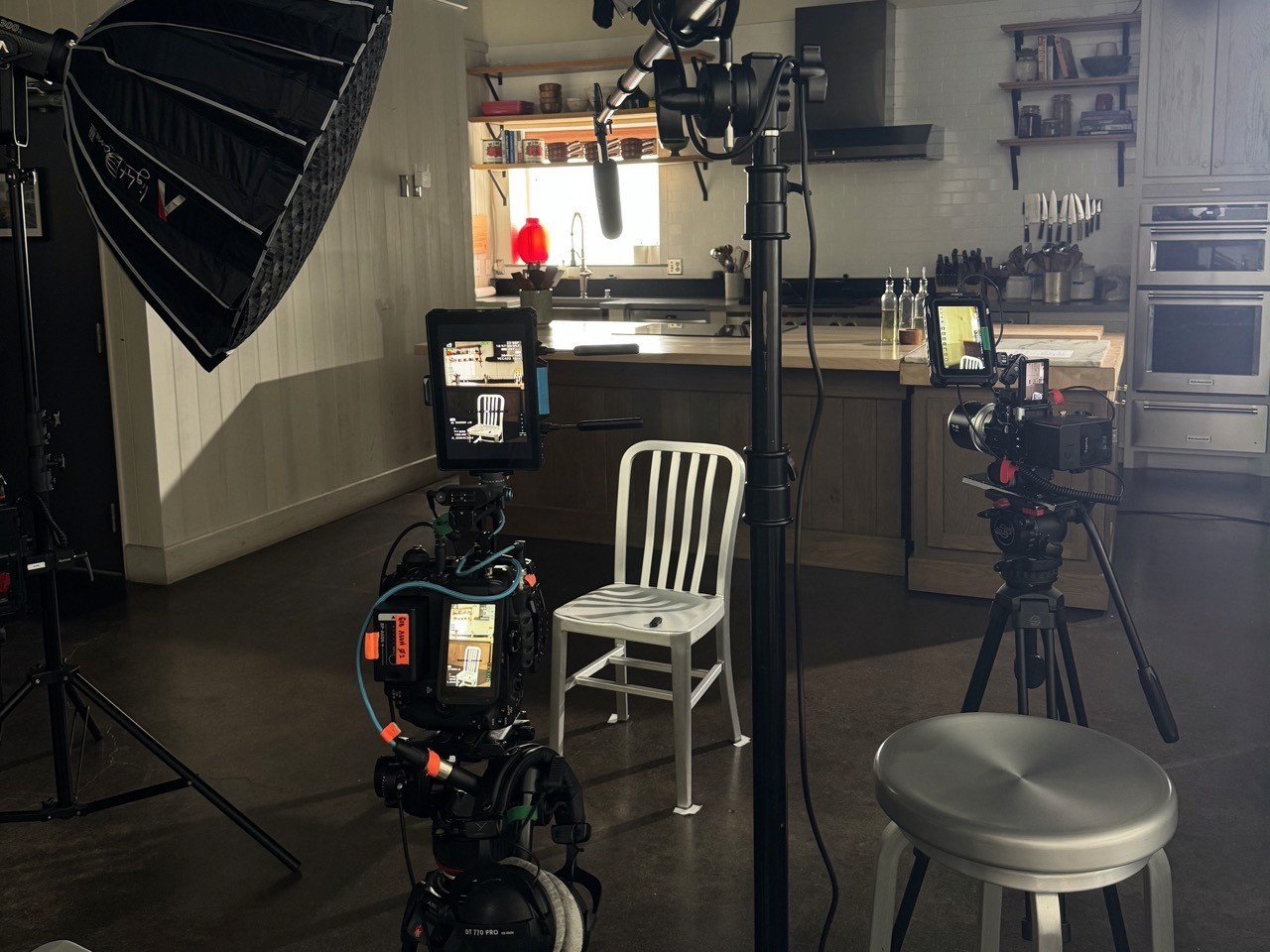
What are the most important questions to ask a video production company?
The twelve questions below, in short form:
Who exactly will be on set, and what does each person do?
What's included in the price, and what's billed separately?
Who owns the final footage, project files, and licenses?
How many revision rounds are included, and how is a "round" defined?
What's the realistic timeline from kickoff to final delivery?
What does your pre-production process look like?
What do you need from us, and when?
Who is my day-to-day point of contact?
Can I see work from a project like mine? Not just your best reel.
What happens if something goes wrong on shoot day?
What deliverables and formats do I get at the end?
What music, talent, and location rights are cleared, and for how long?
The pattern: the reel tells you what a company can do on its best day. These questions tell you what the company will do on your project. Ask all twelve before you sign anything.
1. Who exactly will be on set, and what does each person do?
Ask for the crew size and the role of each person, in writing, on the proposal. "A small crew" and "our team" are not answers.
Crew size is the single biggest driver of both cost and quality. A two-person crew can shoot a clean interview. A two-person crew on a complex product shoot with lighting setups and a moving camera means someone is doing three jobs, and something is getting dropped… usually audio or lighting.
At Bloom, we build most projects around a 3-person crew because it's where the math works: a director, a DP (camera operator), and a gaffer (lighting operator). Everyone does one job well. On the projects where clients ask us to cut to two people, the complaint is rarely "the camera looked worse"; it's that the day ran long and felt rushed.
Follow-up worth asking: are these employees or contractors, and have they worked together before? A crew that has run 50 shoots together works faster than four strangers with excellent individual resumes.
2. What's included in the price, and what's billed separately?
Get the exclusions in writing. A quote that only lists what's included is a quote with a soft edge.
Costs that commonly sit outside a base quote:
Travel, mileage, and per diem
Location fees and permits
Talent, casting, and usage renewals
Music licensing
Specialty gear (drone, jib, gimbal, teleprompter, specialty lenses)
Additional shoot days if the schedule slips
Revisions beyond the included rounds
Additional cutdowns, aspect ratios, or captions
None of these are red flags on their own. Unlisted, they become a second invoice you didn't budget for. For a full breakdown of what moves a number up or down, see our guide to what actually impacts video production cost.
3. Who owns the final footage, project files, and licenses?
There are several distinct things here, and vendors treat them differently:
Asset | Typical industry default | What to negotiate |
|---|---|---|
Final delivered video | Client owns or holds full usage rights | Confirm "all media, in perpetuity, worldwide" if you'll run paid ads |
Raw footage | Production company retains | Ask for it up front; it's cheap before the shoot, expensive after |
Project files (edit, color, motion graphics) | Production company retains | Rarely needed unless you plan to re-edit in-house |
Music, stock, and talent licenses | Licensed for a defined term and territory | Get the expiration dates in writing |
Under U.S. copyright law, work produced by an independent contractor is not automatically a "work made for hire". Ownership transfers only through a signed, written agreement, per the U.S. Copyright Office's guidance on works made for hire. If your contract is silent on ownership, the default may not be what you assume.
At Bloom, we've found the raw-footage question is the one clients most often wish they'd asked. It costs almost nothing to include a raw drive in the original scope. Requesting it eighteen months later, after archives have rolled, is a different conversation.
4. How many revision rounds are included, and how is a "round" defined?
Two vendors can both say "two rounds included" and mean completely different things. Nail down the definition:
Is a round one consolidated set of notes from your whole team, or one email?
Does a round cover structural changes, or only cosmetic ones?
Are color and sound revisions counted separately from the edit?
What's the hourly or per-round rate beyond what's included?
The single best thing you can do here is consolidate feedback internally before sending it. Most revision overages we see aren't caused by picky clients — they're caused by five stakeholders sending notes on five different days, which turns one round into three.
Some companies, including Bloom, offer unlimited revisions until the client signs off. If a vendor offers that, ask what the practical limit is and how they keep a project from stalling.
5. What's the realistic timeline from kickoff to final delivery?
Ask for a date-stamped schedule with milestones, not a range.
A typical mid-sized corporate or brand project runs on this shape:
Phase | Typical duration | What drives the variance |
|---|---|---|
Pre-production | 1–3 weeks | Script approval, casting, location scouting, scheduling stakeholders |
Production | 1–2 days | Number of locations, setups, and on-camera subjects |
Post-production | 2–4 weeks | Revision rounds, motion graphics, music clearance |
Total | 4–8 weeks | Client review speed is the most common delay |
If you have a hard date like a trade show, a launch, an all-hands… say so in the first conversation, not the third. The honest version of this answer includes what the vendor needs from you to hit it. Our production process page walks through the full sequence.
6. What does your pre-production process look like?
The quality of a video is mostly decided before anyone turns a camera on. Ask what happens in the weeks before the shoot.
A strong answer includes: a creative brief or discovery call, a written treatment or script, a shot list, a location scout or tech scout, a call sheet distributed in advance, and a named producer coordinating it. A vague answer, "we'll figure out the details closer to the date," is the most reliable predictor of a chaotic shoot day we know of.
7. What do you need from us, and when?
Good production partners tell you your homework early. Expect to be asked for brand guidelines, logo files, approved messaging, product samples, site access and security clearance, internal stakeholder availability, and a single approver.
Ask for this list in writing at kickoff. The most common cause of a blown timeline isn't the production company. It's a client-side asset or approval that arrives two weeks late.
8. Who is my day-to-day point of contact?
Ask specifically: who answers my email on a Tuesday afternoon, and what's their typical response time?
Some companies sell with a principal and then hand you to a coordinator you've never met. That isn't automatically wrong; but you should know it going in. In smaller shops, you'll often work directly with the owner or lead producer through the whole project.
Responsiveness is the thing clients bring up most in reviews, ahead of camera specs and creative awards. It's a reasonable thing to ask about directly and to check in references.
9. Can I see work from a project like mine? Not just your best reel.
Highlight reels are optimized. Ask for two things instead:
A full-length finished video from a project with similar constraints. Same industry, similar budget tier, similar shoot complexity. A 90-second edit reveals pacing, story structure, and audio quality that a reel montage hides.
A reference from a client with your job title. A marketing manager who has managed the process will tell you things a CMO two levels up never noticed.
Industry experience matters less than people assume, with real exceptions. Filming in a hospital, a manufacturing floor, or a regulated financial environment involves compliance, safety, and access constraints that are genuinely learned. After producing 500+ videos across healthcare, manufacturing, finance, nonprofit, and consumer brands, we've noticed the hard part is rarely the camera work. It's knowing what a facility will and won't allow before the crew is standing in the lobby. You can browse full projects in our portfolio.
10. What happens if something goes wrong on shoot day?
Ask three specific versions of this:
Gear failure. Do you carry backup cameras, audio, and media? Is footage backed up to two drives before the crew leaves the location?
Weather or a cancelled subject. What's the reschedule policy, and who absorbs the cost?
Insurance. Do you carry general liability and equipment coverage, and can you produce a certificate of insurance naming us as additional insured?
The COI question matters more than most marketing teams realize. Many corporate facilities, hospitals, and event venues won't let a crew through the door without one, and getting it issued takes days. Ask early.
11. What deliverables and formats do I get at the end?
"One video" is not a deliverable spec. Get an itemized list before you sign, covering:
Master file and delivery resolution
Aspect ratios needed (16:9, 9:16, 1:1) and how many of each
Cutdowns and their lengths (60s, 30s, 15s, 6s)
Caption and subtitle files (.srt), not just burned-in text
Thumbnails and still frames pulled from the shoot
Audio-described or accessible versions, if required
Where and how files are delivered, and how long they stay available
Vertical cutdowns and caption files are the two most commonly forgotten items, and both are far cheaper to scope up front than to request as a change order. Google's video best practices documentation is worth skimming if the video will live on your own site. How you host and mark it up affects whether it can be indexed at all.
12. What music, talent, and location rights are cleared, and for how long?
Licenses expire. Videos don't.
Ask for a rights summary listing every licensed element, the term, the territory, and the permitted media. The three that most often cause problems later:
Music. A standard stock license may exclude broadcast or paid social. Confirm the media types before the edit locks.
On-camera talent. Actor and employee releases often carry a defined usage term. When an employee leaves, you'll want to know whether you can still run the video.
Locations. A location release should cover the media you actually plan to use, including advertising.
At Bloom, we've found the most expensive version of this problem is a two-year-old brand film that a company wants to put paid spend behind, only to discover the music license covered organic use only. Ask now; it's a five-minute conversation before production and a re-edit after.
The 5 mistakes marketing teams make when hiring a video partner
Choosing on price without normalizing scope. Three quotes at $8K, $14K, and $22K are usually three different projects. Rebuild each into the same crew size, shoot days, deliverables, and revision terms before comparing.
Judging the reel instead of a full video. A reel is 60 seconds of a company's best frames. It tells you nothing about pacing, interview quality, or whether a story holds for two minutes.
Skipping the contract details on ownership and revisions. These two clauses cause more post-project friction than everything else combined.
Bringing the vendor in after the strategy is locked. The best creative input arrives before the concept is final. A production partner brought in as an order-taker will deliver exactly what you asked for, including the parts that were wrong.
Assuming a bigger crew equals a better video. It doesn't. It equals a bigger crew. The right question is whether the crew size matches the complexity of the shoot.
What we actually recommend
Shortlist three, interview two, and use the same question list on both. Comparable answers are worth more than comparable quotes.
Ask for a full-length video and a reference in your role. These two requests filter more effectively than any other part of the process.
Get scope, ownership, revisions, and deliverables in the written agreement. If it isn't in the document, it isn't in the project.
Name a single internal approver before kickoff. More projects run late from client-side approval bottlenecks than from production problems.
Set the budget range out loud in the first call. Content Marketing Institute's B2B research shows a majority of B2B marketers are increasing video investment, and most teams now run a hybrid of in-house and outsourced production. Which means the real question isn't whether to spend; it's which projects justify a professional crew. A vendor who knows your range can tell you honestly what it buys instead of guessing at a number and cutting scope later.
Frequently asked questions
How many video production companies should I get quotes from?
Three is the practical number. Fewer gives you no reference point for pricing; more turns the evaluation into a project of its own. Normalize all three to the same scope: crew size, shoot days, deliverables, and revision rounds before comparing totals.
Should I hire a local video production company or a national one?
Local is usually more cost-effective for anything requiring more than one shoot day or a return visit, because travel, per diem, and lodging compound quickly. National or specialist teams make sense when you need a specific creative capability that isn't available locally. For most corporate and brand work, a strong regional partner delivers the same quality at a lower all-in cost.
How much should a corporate video cost?
Most professionally produced corporate and brand videos fall between $5,000 and $25,000, driven mainly by crew size, shoot days, and post-production complexity. Below roughly $4,000, you're generally buying a one-person crew and limited post, which is fine for internal or social content and rarely right for a flagship brand asset.
Do I need to write a script before I contact a production company?
No — and it's often better if you don't. Bring the objective, the audience, the key message, and the deadline. A good production partner will build the script or treatment with you. What you should have settled internally is who the approver is and what the video needs to accomplish.
What insurance should a video production company carry?
General liability (commonly $1M–$2M) and equipment coverage at minimum, plus workers' compensation if they employ crew. Ask whether they can issue a certificate of insurance naming your company as additional insured. Many corporate and healthcare facilities require it before a crew can enter.
How long does a corporate video take to produce?
Four to eight weeks from kickoff to final delivery is typical: one to three weeks of pre-production, one to two shoot days, and two to four weeks of post. Rush timelines are possible but usually cost more and compress the revision window.
Who owns the raw footage after a video project?
By default, most production companies retain the raw footage and project files while the client receives full usage rights to the finished video. If you want the raw files, request them during scoping. It's inexpensive to include up front and often unavailable later once archives roll.
What's the difference between a videographer and a production company?
A videographer typically operates as a one-person crew handling camera, audio, and edit. A production company brings a scoped team, a producer, a pre-production process, insurance, and contractual terms around ownership and revisions. For a quick social clip, a videographer is often the right call. For a brand asset with multiple stakeholders and a deadline, the process is what you're paying for. More answers are on our FAQ page.
Key takeaways
The reel shows what a company can do on its best day; these twelve questions show what it will do on your project.
Crew size is the biggest driver of both cost and quality. Get every role named in writing on the proposal.
Ownership, revision terms, and deliverable specs cause more post-project friction than anything else. Settle all three in the contract.
Ask for a full-length video from a comparable project and a reference who holds your job title. Those two requests filter better than anything else.
Client-side approval delays, not production problems, are the most common cause of a missed deadline. Name one internal approver before kickoff.
Music, talent, and location licenses expire. Confirm term, territory, and permitted media before the edit locks.